Guides
Where home inspection profit comes from: pricing
Home inspection pricing sets what a job earns, but profit comes from the cost per inspection, the hours it takes and the cash that arrives after.
What to take away
- Price from cost per inspection, not from the fee the office across town charges.
- The scarce hour is the licensed inspector's on-site time, and everything else schedules around it.
- Package tiers sell best when each one names what the client gets and what it excludes.
- Ancillary work (radon, mold sampling, sewer scope) carries its own cost and its own price line.
- Deposits and card-on-file rules decide whether a slow month becomes a cash problem.
This article covers business operations only. Licensing, scope of practice and report standards are set by your state board and by InterNACHI or ASHI, and questions about a specific property belong to a licensed professional engineer or the local building code authority. Tax and recordkeeping decisions belong to a CPA.
The three numbers behind every inspection fee
Cost per inspection is the first number. Add the inspector's paid hours for the job. Add the payroll burden on those hours. Add vehicle and fuel. Add report software. Add insurance allocated per job. Add the office time to book, confirm and collect.
Three Numbers Behind Every Fee
- Cost per inspectiontotal job cost
- Hours per inspectiontime on job
- Days to collectcash timing
Burden is the part owners forget. Employer payroll taxes, workers compensation, and any paid time off all ride on top of the hourly rate. A $40 hour is not a $40 cost.
The second number is hours per inspection. A 2,400 square foot house with a crawlspace and an older furnace is not a 90 minute job, and pricing it as one is how a full calendar turns into a thin month.
The third is collection. A fee you invoice on the 3rd and receive on the 40th day funds nothing in between. Track days to collect next to your average fee.
Package tiers that hold up on the calendar
Most inspection companies sell three tiers, and the difference between them should be time and scope, not adjectives. A basic tier covers the structure, roof, electrical, plumbing and HVAC. A standard tier adds the items your market expects, such as a termite letter or a pool check. A premium tier adds ancillary services and a faster report.
| Tier | What it adds | What it costs you |
|---|
Inspection Package Tiers
Basic
- Scope
- Structure, roof, electrical, plumbing, HVAC
- Report time
- 24 hours
- Cost to you
- One inspector, one visit
Standard
- Scope
- Adds termite letter, pool check
- Report time
- 24 hours
- Cost to you
- Second specialist or added site time
Premium
- Scope
- Adds radon, mold, sewer
- Report time
- Faster report
- Cost to you
- Equipment, lab fees, second trip
Price the middle tier so most clients choose it. If nearly everyone buys the cheapest tier, your entry price is too low or your upgrades are not explained at the point of booking.
Radon, mold and sewer work each carry a real cost: canisters or pumps, lab analysis, and sometimes a return visit. Give each one its own line on the estimate so the client sees what they are buying.
The inspector hour is the constraint
Sellable work stops when the licensed inspector's day is full. Schedulers, report reviewers and office staff can be added; a licensed inspector takes longer to hire and train.
Drive Time Eats the Day
45 min inspection can cost 90 min of the day
In a spread-out metro
Route density is a pricing decision
Measure contribution per inspector hour, not revenue per invoice. Two jobs at a low fee can beat one at a high fee, or lose to it, and only the hours tell you which.
Ancillary specialists change the math. If a radon technician can run tests while the inspector writes, you have added sellable capacity without adding a licensed hour.
Watch drive time. In a spread-out metro, a 45 minute inspection can cost 90 minutes of the day. Route density is a pricing decision as much as a scheduling one.
Estimates clients can read and approve
Group the estimate by system, not by the order you happen to inspect. State what the fee includes, what it excludes, and what would change the total.
Estimate Readability Checklist
- Group by system, not inspection order
- State what fee includes and excludes
- Name report delivery time
- Define added work approval process
- Keep language plain, no glossary
Name the report delivery time in the estimate. "Report within 24 hours" is a promise the client can hold you to, and it is also a reason to charge more than the inspector who takes three days.
Define how added work gets approved before the visit, in writing. If the client asks for a sewer scope on site, someone has to say yes, quote it, and record it.
Keep the language plain. Clients sign faster when they can read the scope without a glossary.
Discounts, credits and the money you never see
Every discount needs a reason code and a name attached. "Repeat client," "agent volume," "goodwill after a complaint" and "price match" are four different decisions with four different costs.
Discount Approval Decision
Is the discount above the owner approval limit?
owner approves
staff applies with reason code
Set a limit above which the owner approves. Untracked discounts to smooth over a service problem hide the real complaint rate.
Refunds and re-inspections are the expensive version of the same problem. A free return trip to check a repaired item costs an inspector hour, and that hour comes out of the week's sellable time.
Review adjustments by reason and by approver each month. If one reason dominates, the fix is usually in the process, not the price.
Payment timing and the cash gap
Deposits or card-on-file at booking cut no-shows and shorten the gap between the visit and the money. Decide the rule and apply it the same way to every client.
Card fees, financing and failed payments all come out of the fee. A 3 percent processing cost on a $500 inspection is a real line, and it belongs in your cost per inspection.
Disputes and slow payers are a collection process, not a pricing problem. Set the point at which a job goes to a second call, then a written notice.
The IRS publishes what records support income and expenses at what kind of records to keep, and that list is the same one your cost per inspection depends on.
Raising prices without losing the calendar
Change one thing at a time. Raising every line by the same percentage tells you nothing about which tier clients actually value.
Pilot the new price on one service or one metro for a month. Write down the result you expect and the first sign it is failing, then compare quote corrections and client questions before and after.
Check demand, capacity and training before you blame the price. A jump in questions usually means the estimate got less clear, not that the market moved.
Tell the team before the client. Agents who refer you will hear the new number from a client, and they should hear it from you first.
If you advertise a price or a turnaround time, the FTC's guidance on truthful advertising claims applies to inspection marketing the same way it applies to any small business.
Building the fee schedule into the business plan
The fee schedule, the cost per inspection and the hours per job are the load-bearing numbers in a home inspection business plan. Everything else, from hiring to marketing spend, is sized against them.
Wage inputs are worth checking against published data rather than memory. The Bureau of Labor Statistics publishes wage estimates by occupation and metro at Occupational Employment and Wage Statistics, which is a starting point for a local pay conversation, not a substitute for one.
If you are still in the planning stage, the SBA's business guide walks through startup costs, permits and insurance in the order most owners meet them.
Common questions
Should I price below the inspector down the street?
Only if your cost per inspection is genuinely lower, which usually means a shorter drive, a faster report or a cheaper delivery method. Matching a competitor's fee without knowing their volume tells you nothing about whether you can survive at it. Price from your own hours and costs, then check where you land.
How many package tiers should I offer?
Three works for most companies because it gives the client a real choice without turning booking into a consultation. Two tiers can work in a market where clients expect one standard scope. More than four usually means the differences blur and the office spends its time explaining instead of scheduling.
When is the right time to raise prices?
When your cost per inspection has moved, when the calendar is full for weeks out, or when the mix has drifted to the cheapest tier. Raise on a date you announce, not mid-week, and give referring agents enough notice to update their own materials. Recheck conversion a month later before deciding whether to raise again.
What if a client disputes the fee after the report?
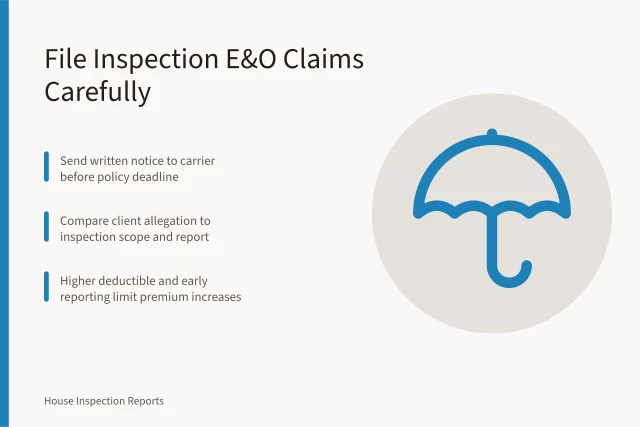
Separate the fee question from the report question. Answer the scope question first, in writing, against the estimate the client approved. If the dispute is about the inspection itself, follow your complaint process and your E&O carrier's instructions before offering any credit.