Guides
Where home inspection demand is heading in 2027
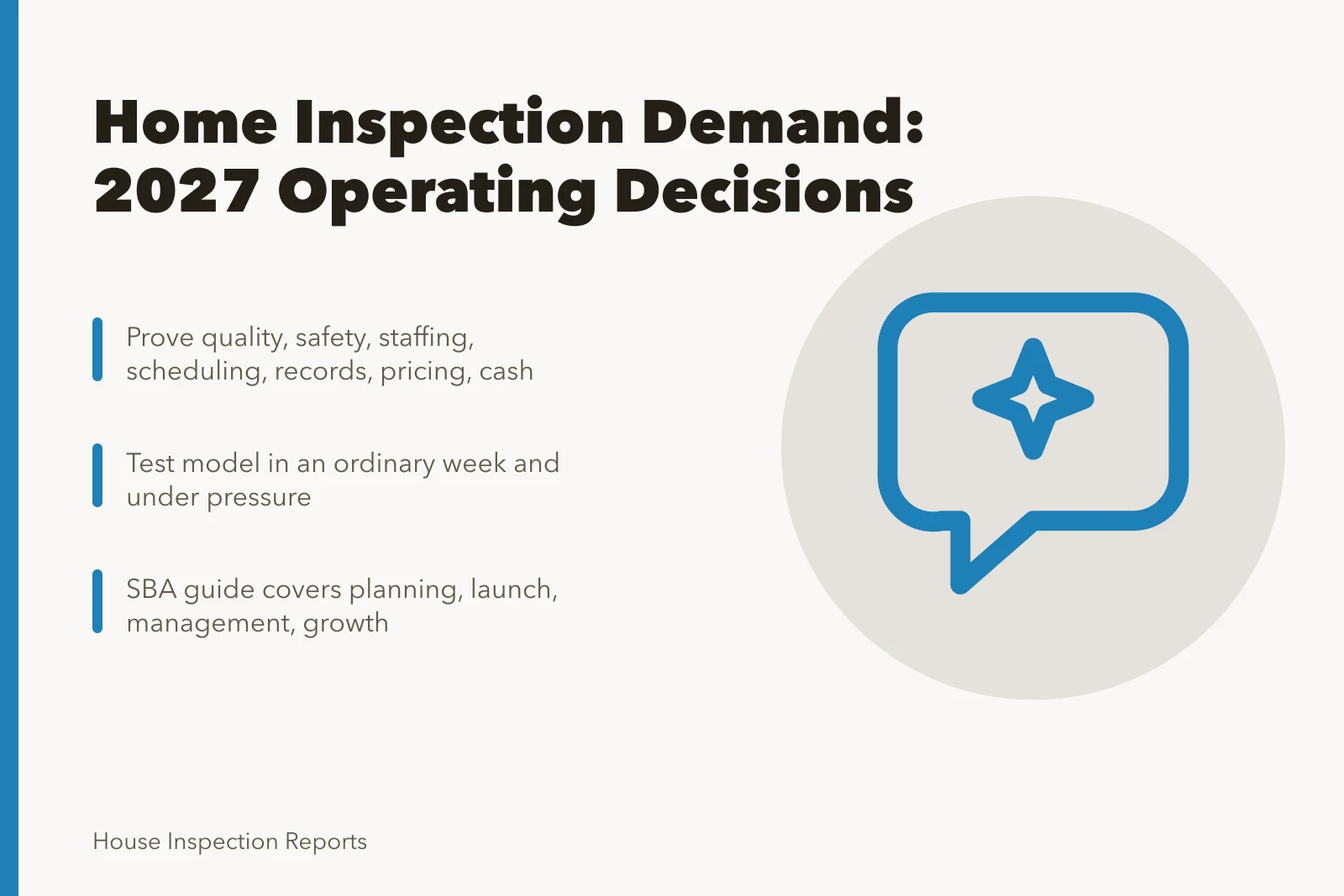
Home inspection demand in 2027 turns on mortgage rates, insurance-driven inspections and aging housing stock, not on clever marketing spend.
What to take away
- Transaction volume still sets the baseline. When mortgage rates ease, purchase inspections rise first in the metros where inventory was held back longest.
- Insurance-driven work grows faster than purchase workwind mitigation, four-point and roof condition reports for carriers in coastal and hail states.
- Aging housing stock pushes ancillary revenue. Radon, sewer scope and mold sampling sell best on pre-1980 homes.
- Inspector supply, not buyer demand, caps growth in most markets. Wages and training time decide how many jobs you can actually book.
- Price by metro, not by brand. A fee schedule that works in Houston undercharges in Phoenix.
The 2027 demand picture, in four trends
1. Purchase inspections follow the rate, with a lag
Purchase inspections track closed transactions, and transactions track mortgage rates. When the 30-year rate falls, buyers who sat out return in waves, and inspection bookings lag closings by roughly the escrow period. Watch the rate, then watch your own booking calendar four to six weeks behind it.
The rebound lands unevenly. Markets that held inventory through the slow years see the sharpest jump; markets that never slowed see little change. Compare your metro against the national figures in the U.S. Bureau of Labor Statistics: Occupational Employment and Wage Statistics Tables before you assume your area behaves like the average.
2. Insurance-driven inspections keep climbing
Carriers in coastal and hail-prone states increasingly want wind mitigation, four-point and roof condition reports before they bind or renew a policy. This work is less rate-sensitive than purchase work because renewals happen whether or not anyone moves.
Treat it as its own service line. It has different forms, different turnaround expectations and different client relationships, usually with agents and underwriters rather than buyers. Confirm what your state licensing board allows you to inspect and report on before you advertise it.
3. Older housing stock drives ancillary revenue
The median American home is decades old, and older homes fail more systems. Radon, sewer scope, mold sampling and thermal imaging sell on pre-1980 properties far more often than on new builds. Each add-on needs its own training, equipment and report language.
Radon is the clearest example. The U.S. Environmental Protection Agency: Home Buyer's and Seller's Guide to Radon explains why test conditions, documentation and timing matter in a transaction. Health questions about radon or mold go to the EPA, the CDC or a certified industrial hygienist, never to an inspector.
4. Inspector supply caps growth
Demand you cannot staff is not revenue. Training a new inspector takes months of supervised rides before they run solo, and experienced inspectors are the hardest hire in the trade. Wages vary widely by state and metro, so pull current figures rather than guessing.
Run the arithmetic in your own numbers: annual jobs per inspector times average fee, minus wage, vehicle, insurance and software cost per inspector. If the result is thin, hiring more people scales the loss, not the profit.
What this means for your fee schedule
Price by metro. A fee schedule built in one market undercharges in another because travel time, drive distance and local expectations differ. Build each package from your own cost per inspection, then compare the result to what agents in that metro actually pay.
Rate Move to Booking Lag
- 30-year mortgage rate falls
- Buyers return in waves
- Closings follow escrow period
- Inspection bookings lag 4-6 weeks
| Trend | What drives it | What to do this quarter |
|---|---|---|
| Purchase volume | Mortgage rates and inventory | Watch bookings four to six weeks behind rate moves |
| Insurance reports | Carrier requirements at bind and renewal | Add forms, price turnaround separately |
| Ancillary services | Age and condition of housing stock | Train and equip one add-on at a time |
| Inspector supply | Wages and training time | Cost a hire before posting the job |
Where to check your assumptions
The U.S. Small Business Administration: SBA Business Guide lays out planning, launch, management and growth activities, including market research and hiring, which is where a demand forecast should start.
Keep the forecast honest by reviewing it monthly against your own bookings, average fee and jobs per inspector. A trend that does not show up in your calendar is not your trend yet.
Common questions
Which trend matters most in 2027?
Purchase volume still sets the baseline, but insurance-driven reports grow more steadily because renewals happen regardless of rates. If you serve a coastal or hail state, weight insurance work higher in your plan.
Should I expand to a new metro because of these trends?
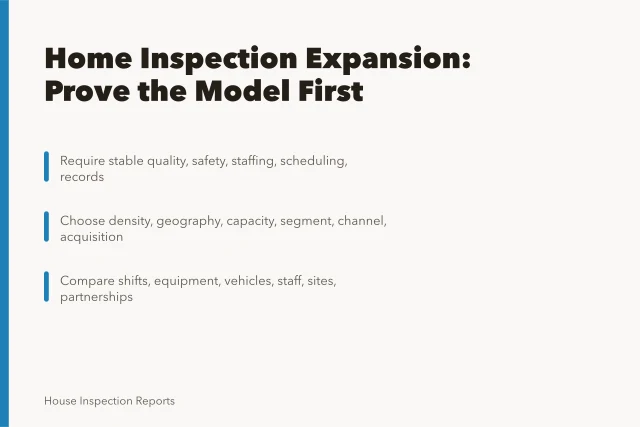
Only after your current operation runs without you in it. Read best markets for a home inspection business in 2027 before comparing markets, and study buyers, competitors, pricing and workforce locally rather than copying assumptions.
How do I price ancillary services?
From your own cost per inspection: equipment, consumables, training time and added report time, plus the turnaround the client expects. Do not borrow a competitor's price without knowing their cost structure.