Guides
Selling a Home Inspection Business in 2027: A Buyer's Due Diligence Checklist
Due diligence checklist for selling a home inspection business: document sets, recast income, deal timeline, E&O tail coverage and closing obligations.
What to take away
- Buyers pay for repeat revenue, not for a license. Agent relationships and the book of business carry most of the price.
- Document review usually takes longer than price negotiation. Two to three months from first disclosure to closing is normal for a small firm.
- Every expense the seller adds back to net income has to survive a lender's review, so keep receipts and cancelled checks.
- Claims history and unfinished report obligations stall more deals than the multiple does.
Documents a buyer will ask for first
A serious buyer requests the same file set before discussing price. Sellers who assemble it early defend the asking price with evidence rather than memory.
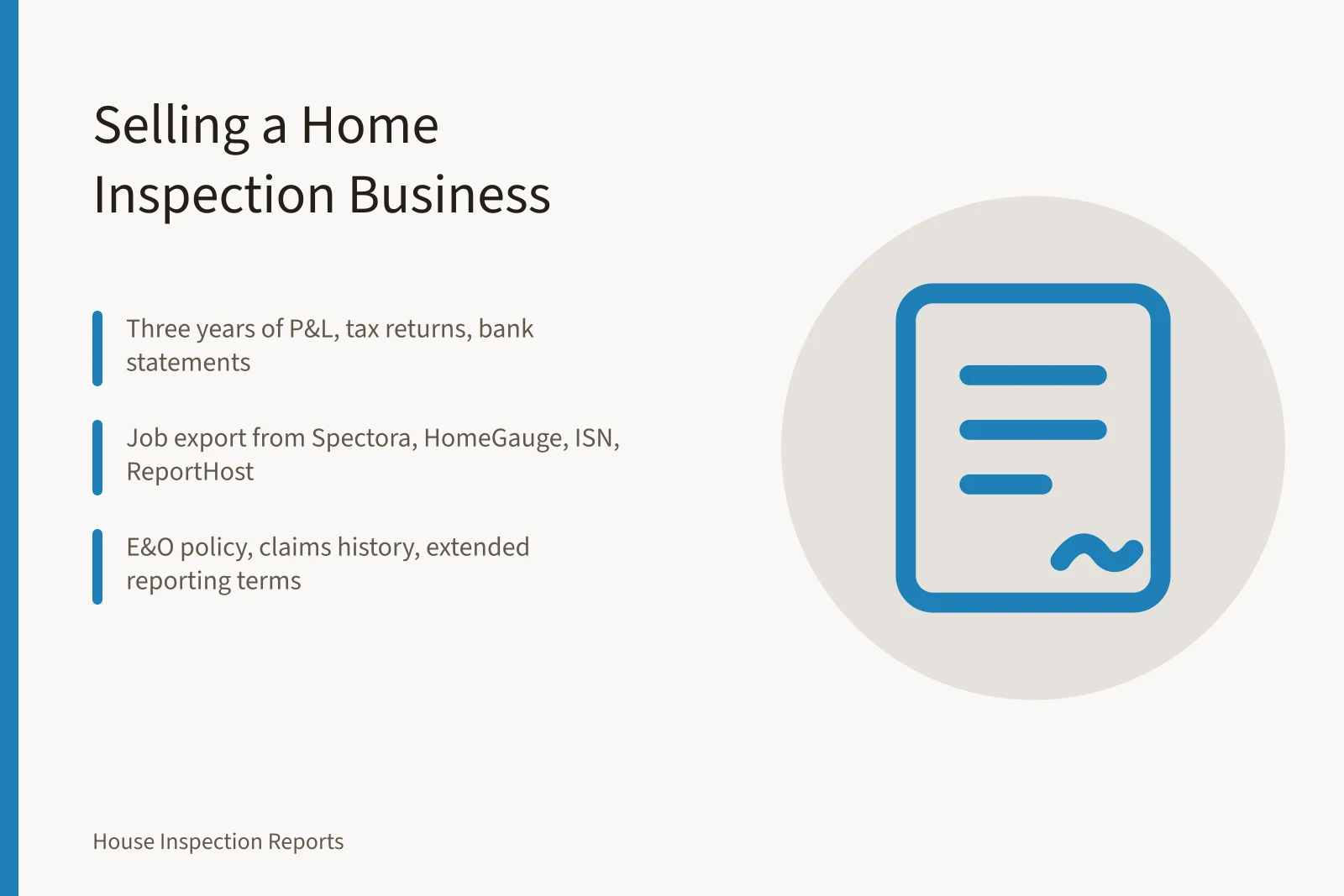
- Three years of profit and loss statements, tax returns and bank statements.
- A job export from the reporting software. Spectora, HomeGauge, ISN, ReportHost and Home Inspector Pro all export completed jobs by month.
- The errors and omissions policy, the claims history and the carrier terms for extended reporting after closing.
- Client and agent lists with the last service date for each, plus a draft non-solicitation covenant.
- Pre-inspection agreements, including the limitation of liability clause in every version used.
- An equipment schedule covering radon monitors, moisture meters, infrared cameras, ladders and vehicles.
Recasting income before the buyer's lender sees it
Every expense the seller removes from net income has to be a real business cost that the buyer will not inherit. The IRS list of deductible business expenses is the shared vocabulary for that conversation.
Sellers who want the asking price and the recast statement to agree should work through the rules of thumb for sellers before they list.
Add-on services face their own scrutiny. Radon testing and mold sampling are priced on inspector time plus lab fees, and the EPA radon page describes what a proper test involves, which helps a buyer judge whether the fee is defensible.
Example: a two inspector firm preparing for sale
The seller runs two inspectors and one office manager. The buyer's accountant rebuilds net income by adding back the owner's vehicle, family health coverage, software subscriptions and continuing education. Every add-back needs a receipt or a cancelled check.
Next the buyer tests concentration. If one brokerage or agent supplies a large share of the booked jobs, the offer shifts toward an earn-out or a longer seller note. Deals break over concentration more often than over the multiple.
Timeline, deposit and holdback
- Sign a mutual confidentiality agreement and deliver the document set.
- Set a price range from the recast statement, then let the buyer's lender order an appraisal.
- Choose the structure: asset purchase, entity sale or a blend with seller financing.
- Agree on a transition period, commonly 30 to 90 days of joint inspections and agent introductions.
- Close and hold back part of the price until older receivables are collected.
Timing matters as much as paperwork. Home inspection demand in 2027 turns on mortgage rates, insurance driven inspections and aging housing stock. A soft quarter needs an explanation before a buyer pays for goodwill.
What transfers and what does not
| Item | Typical treatment |
|---|---|
| Phone number, website and domain | Moves with the assets, with a redirect period |
| Software account | Vendor dependent, some licenses transfer |
| Errors and omissions policy | Does not transfer, the buyer buys new coverage |
| Booked or unfinished inspections | Seller completes them or the price drops |
| Client and agent list | Transfers only with a signed covenant |
Anything tied to a personal license, including the inspector's own credential, does not move with the sale. Confirm each line in writing before the deposit is released.
The obligations that survive closing
A pre-inspection agreement usually caps liability at the fee paid, but that cap has limits when negligence is alleged. Errors and omissions coverage is written on a claims made basis. The seller's extended reporting period matters more than the buyer's new policy, and the overview of errors and omissions insurance explains that coverage trigger.