Guides
Home inspection software options, reviewed and ranked
Home inspection software options are ranked by report speed, scheduling, payments and the analytics dashboard data you can pull out each month.
What to take away
- Report writing speed sets your inspections per day, so it sets revenue more than any other feature.
- Spectora, HomeGauge, ISN, Palm-Tech, Horizon, Home Inspector Pro, Tap Inspect, Inspectcheck, ReportHost, ScribeWare and Inspector Toolbelt each solve a different part of the job.
- Ask what data you can export before you sign, because your monthly numbers live in that export.
- Your state licensing board and your report standard, InterNACHI or ASHI, set what the report must contain.
- A software demo tells you nothing until you run one of your own past inspections through it.
This article is general business information, not engineering, legal, tax or insurance advice. Report content and inspector duties follow your state licensing board and the standard of practice you publish, so confirm both before you change tools.
What the software actually has to do
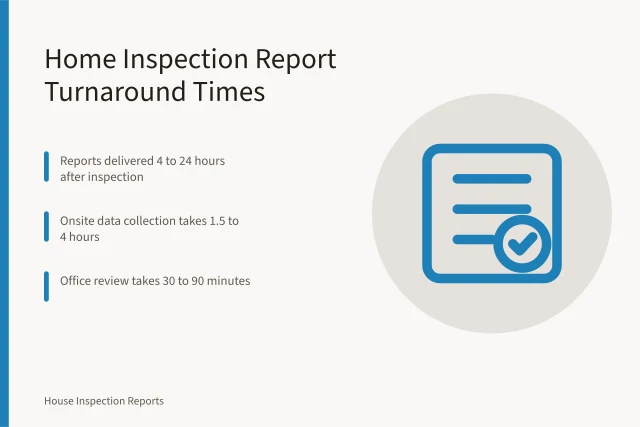
A home inspector sells one thing: a report delivered the same day, with photos, from a phone on site. Everything else is overhead. So judge each tool by how many inspections it lets one inspector finish in a day, not by its feature list.
Three jobs matter. Capture findings on site without retyping. Get the report to the client and the agent before dinner. Give you a monthly export you can total. A tool that does two of the three costs you money every week.
The shortlist, and who each one suits
Our top pick is Spectora for a solo inspector who wants fast, same-day reports. Our pick for a multi-inspector firm that books through agents is ISN. The table ranks all eleven in the order we would try them, and the cost column gives typical US bands per inspector per month, not quotes.
| Rank | Tool | Best for | Typical monthly cost | Scheduling, payments, export | Watch |
|---|---|---|---|---|---|
| 1 | Spectora | Solo inspectors who want fast, modern reports | $100 to $200 per inspector | Agent booking, card payments in the app, CSV of inspections and fees | Fast reports, thin accounting |
| 2 | ISN | Multi-inspector firms booking through agents | $50 to $150 per user | Agent-facing booking, card processing, CSV and API export | Strong office tools, report writing needs a partner |
| 3 | Inspector Toolbelt | Firms wanting scheduling, reports and payments in one | $50 to $150 per inspector | Online booking, card payments built in, CSV export | One login for three jobs, report depth trails specialists |
| 4 | HomeGauge | Firms with several inspectors and a review step | $100 to $200 per inspector, tiered | Office calendar, invoicing separate, CSV export | Review step built in, older interface |
| 5 | Tap Inspect | Phone-first inspectors working alone | $50 to $150 per inspector | Online booking, card processing, CSV export | Phone speed, thin for multi-inspector firms |
| 6 | Home Inspector Pro | Inspectors who want deep template control | $50 to $100 per inspector | No scheduling, no payments, HTML and PDF output | Deep template control, manual setup |
| 7 | Palm-Tech | Inspectors who want desktop report building | One-time $500 to $900, or $50 to $100 a month | No scheduling, no payments, report files only | Offline desktop work, no back office |
| 8 | Inspectcheck | Small firms wanting simple reports and scheduling | $40 to $100 per inspector | Basic scheduling, limited payments, CSV export | Simple and cheap, fewer templates |
| 9 | ScribeWare | Inspectors who write narrative-style reports | $50 to $100 per inspector | No scheduling, no payments, PDF and docx output | Narrative output, slower at volume |
| 10 | Horizon | Inspectors already using the Horizon report library | $50 to $100 per inspector | Basic scheduling, third-party payments, CSV export | Familiar report library, older mobile app |
| 11 | ReportHost | Inspectors who want a low-cost web report | Under $50 a month, or per report | No scheduling, no payments, PDF archive | Cheap start, basic analytics |
Confirm current pricing with each vendor, because published rates change and per-inspector add-ons move the total. Run the arithmetic yourself: monthly subscription plus payment processing plus any per-report fee, divided by inspections booked, gives your cost per inspection. Compare that to your average fee, not to another company's.
A worked example of the cost per inspection
Take a plan at $100 per inspector per month and card processing at 3 percent, with an average fee of $400. At twelve inspections a month you pay $100 plus $144 in processing, so $244, or about $20 an inspection.
Same numbers at thirty inspections a month: $100 plus $360 in processing, or about $15 an inspection. The figures are illustrative. Put your own rates in and run it again.
Cost per inspection formula
- Amonthly subscription
- Bcard payment percent
- Caverage inspection fee
- Dinspections per month
If that number eats more than a few percent of your average fee, either your volume is too low for the plan or the plan is too expensive for your market. High-cost metros carry higher fees and absorb software easily. Low-cost metros do not, and a per-report fee hurts most there.
What to check before you commit
- Run three of your own past inspections through the trial and time the report build.
- Export a month of data to a spreadsheet and confirm the fields you need are there.
- Ask how the tool handles your state's required disclosures and your standard of practice.
- Test it on your phone, on site, with poor signal.
- Ask what happens to your reports if you stop paying.
- Check who owns the client data and how you get it out.
On data handling, NIST small business quick-start guides give a plain starting point for protecting client records, and CISA small business guidance covers the everyday digital risks that hit small firms. For how long to keep the records behind those reports, see the IRS guidance on records.
Where the software fits your business model
Software is one line in a plan that also covers fee schedule, package tiers, inspector pay and marketing. Write the plan first, then pick the tool that reports on it. That is the order the table above uses, because a tool only earns its place if it exports the four numbers in your plan.
Our guide to the home inspection business plan walks through the numbers a lender or a partner will ask for.
The monthly export is where the tool earns its keep. Track inspections completed, average fee, report turnaround and re-inspection rate. If the software cannot report those four, you are paying for a form filler. The software and KPI guide lists the metrics worth watching each month.
Common questions
Do I need software at all as a solo inspector?
You can start with a word processor and a photo folder. Most inspectors switch once the admin time after each job costs more than the subscription, which usually happens before twenty inspections a month.
Which tool is best for a multi-inspector firm?
Look for a review step, per-inspector logins and agent booking. HomeGauge, ISN and Inspector Toolbelt are built around that workflow. Test the review step first, because it is where reports stall.
What about report standards and licensing?
Your state licensing board sets what you must be licensed to do, and InterNACHI or ASHI sets the report standard you publish. No software makes you compliant. Name your standard in the report and check the current board requirements before you change your template.